
The Key to Trade Management Mastery and Systematic Loss Management
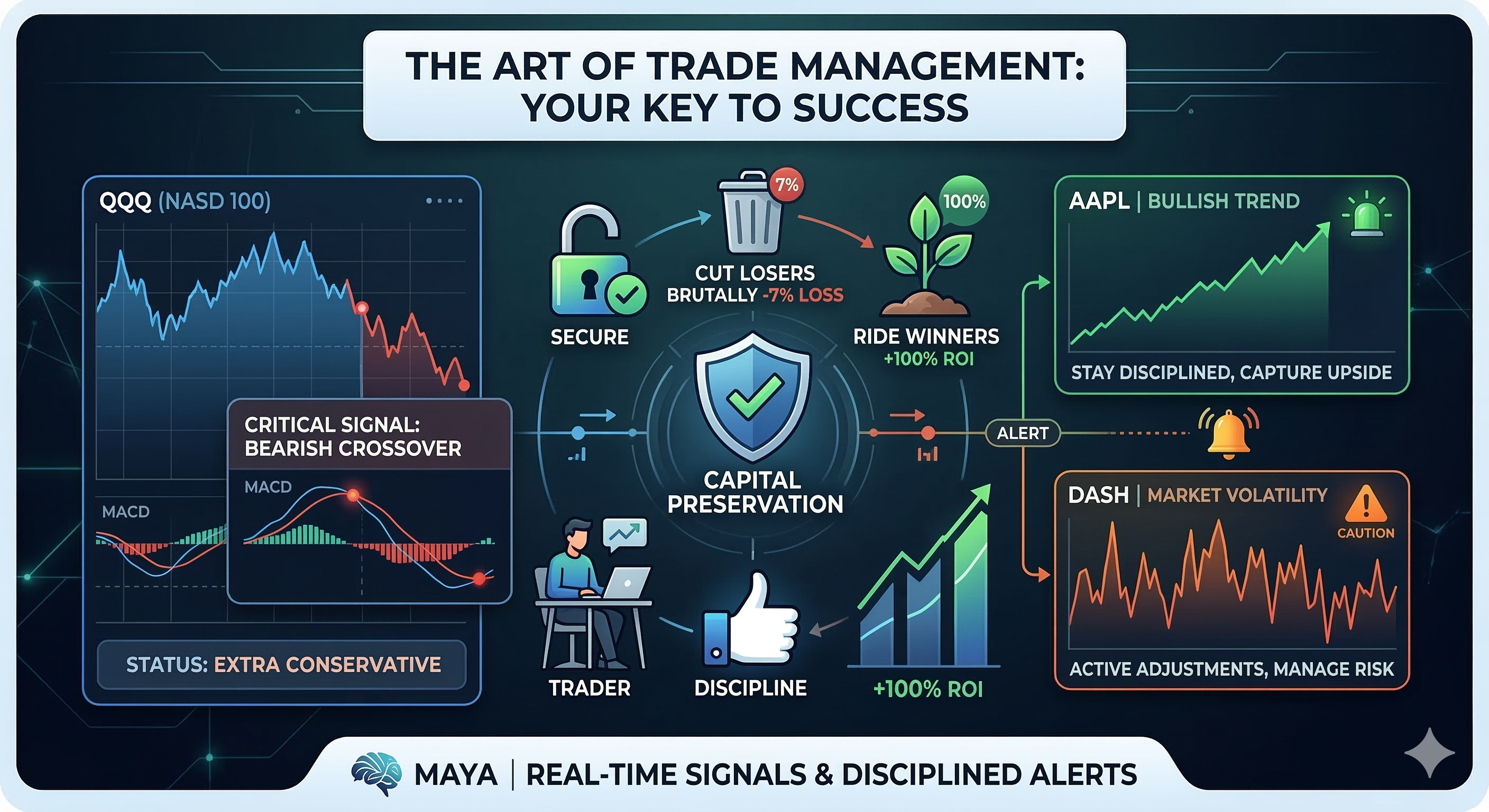
What separates profitable traders from the 90% who fail is one thing - trade management. Last week, Maya took four losses. And that is exactly why Maya's portfolio continues to grow. Those four trades closed at -24%, -7%, -12%, and -8%. Without systematic stops, they could have been -50% to -80% disasters. This is not luck. This is process.
Why Trade Management Matters More Than Entry
Most traders obsess over finding the perfect entry. They spend hours analyzing charts, looking for that 'sure thing.' Here is the uncomfortable truth: there are no sure things. Even the best setups fail 30-40% of the time. What separates professionals from amateurs is not better entries - it is better exits. Maya's edge is not in finding trades. It is in managing them ruthlessly once they are open.
Maya's Trade Management Flowchart: The Secret Sauce
Every single trade Maya takes follows this systematic decision tree. No exceptions. No emotions. Just rules.
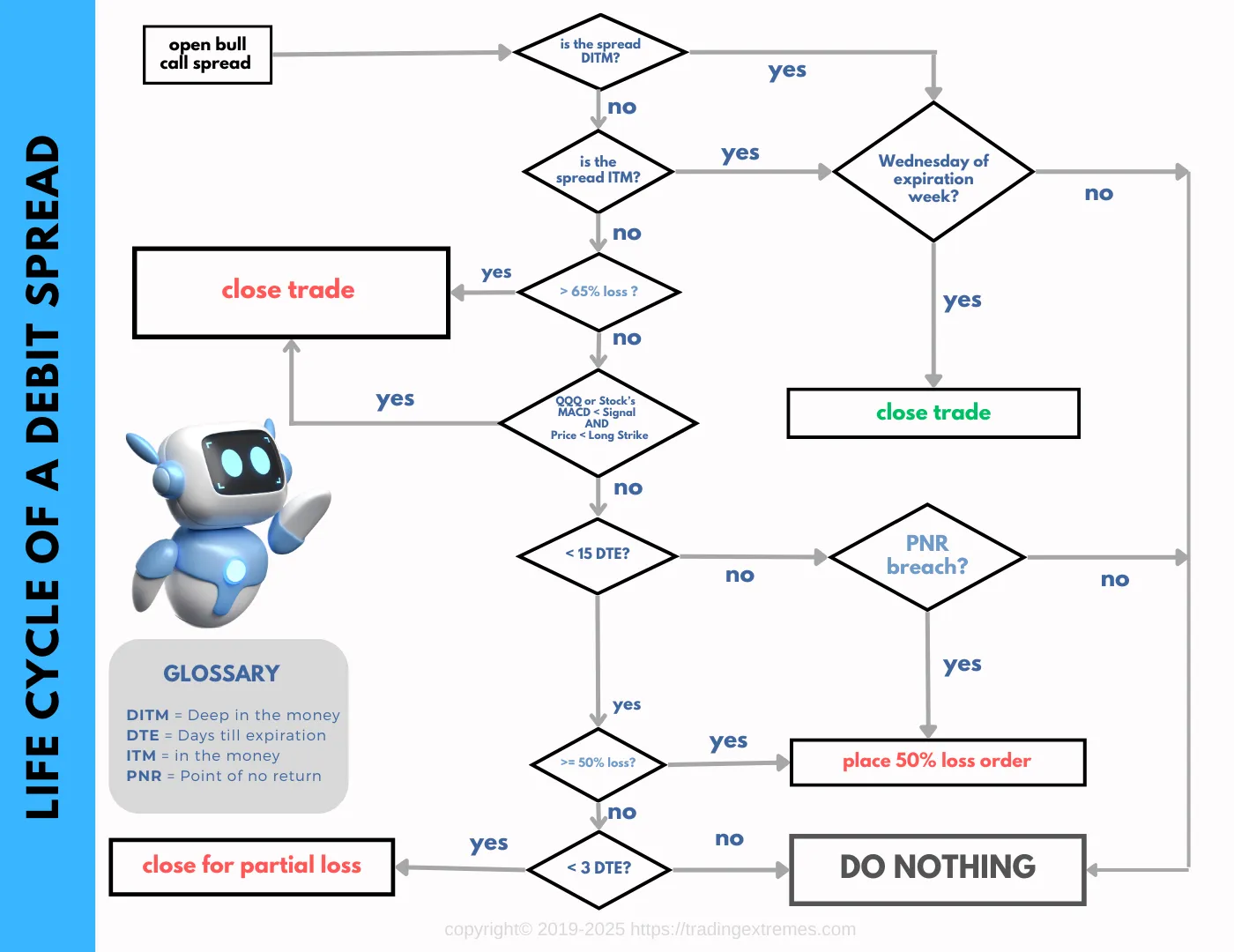
Maya's systematic trade management flowchart - the real reason for consistent results
Maya generates these returns because the system follows emotionless, rules-based exits. In choppy or down markets, Maya's exit rules prioritize capital preservation; when the right environment shows up, the system presses its edge and captures outsized gains.
This flowchart is not just a guide - it IS the strategy. Every position is evaluated against these rules twice daily. When a rule triggers, Maya acts immediately. No second-guessing. No hoping for recovery. Just execution.
Maya's 9 Exit Rules That Protect Your Capital
Maya uses NINE different exit triggers - this is why losses often get cut at just 2%, 4%, or 8%, way before traditional stop losses:
- Profit Target: Lock in gains at 94% ROI
- PNR (Point of No Return): Exit early when price crosses danger zone (often 2-8% loss)
- MACD Reversals: Exit when momentum shifts against the trade
- Earnings Guard: Exit 7 days before earnings
- Dividend Shield: Close bull calls before ex-date if assignment risk exists
- Expiry Week: Close all positions by Wednesday of expiration week
- QQQ MACD: Exit when market momentum turns bearish AND price below long strike
- DTE Stop: 50% stop loss when 15 or fewer days to expiration
- Hard Stop: Absolute exit at 65% loss (rarely reached because other rules trigger first)
The key insight: Most traders only have ONE rule (the 50% stop). Maya has NINE rules working together, which is why the average loss is so much smaller. Look at Maya's trade history - you will see trades closed at -4%, -7%, -12%. These are not failures. These are the PNR rule, the MACD rule, or the earnings rule doing their job.
Trade: AAPL - Cut at -24%
What Happened
AAPL faced downward pressure in the market due to broader technology sector weakness. Maya's position in AAPL began to deteriorate as the stock price slipped below critical support levels. The initial long position turned into a losing trade.
Understanding the PNR Rule
The Point of No Return (PNR) rule is designed to identify when a trade has moved into a concerning territory. Calculated based on the strike prices and prevailing volatility, it triggers an exit when the price crosses a predetermined threshold, typically resulting in small losses ranging from 2% to 8%. This early warning system prevents larger drawdowns that can severely impact Maya's capital.
How It Played Out With AAPL
On the day the PNR rule triggered, AAPL was trading at a significant low, reflecting mounting bearish sentiment. As the stock price crossed the PNR threshold, Maya's exit mechanism was activated. The position was closed at -24%, effectively minimizing the loss and preserving capital for future trades.
Chart
On the exit date, Maya's PNR triggered at -24%. The position was closed immediately - no hesitation, no hoping for recovery, just systematic execution of the rule.
Without this rule: Without the PNR rule catching this at -24%, AAPL continued to drop another 10% over the next week. The position would have plummeted to -45% before the DTE stop kicked in, turning a manageable loss into real damage. By exiting at -24%, Maya preserved $1,200 that stayed ready for the next opportunity.
Trade: DASH - Cut at -7%
What Happened
With major indices retreating daily due to geopolitical instability, the market remains volatile. Maya, our lead signal, officially entered bear territory when the QQQ MACD crossed below the signal line.
In this environment, Maya shifts to an ultra-conservative defensive posture. To preserve capital, any trade where the stock price dips below its short strike is closed immediately. This disciplined "brutal" cutting of losers—resulting in that minor 7% loss—is exactly what allows the portfolio to survive unfavorable regimes. Since Maya’s winning trades typically yield near 100% ROI, this strategy ensures that a few small exits don't derail our long-term growth. Maya will continue to provide real-time entry and exit alerts to help you maintain trading discipline.
Chart
On the exit date, Maya's Hard Stop triggered at -7%. The position was closed immediately - no hesitation, no hoping for recovery, just systematic execution of the rule.
Without this rule: Without the Hard Stop, DASH could have continued dropping another 15%. The position could have hit -35% before the DTE stop was reached, significantly impacting capital. By exiting at -7%, Maya preserved $800 that could be deployed in more profitable trades.
The Math: Small Losses, Big Protection
Share this post
Comments 0
Leave a Comment
No comments yet. Be the first to comment!
Stay Updated
Subscribe to our newsletter for the latest trading insights and updates.
Autotrading is Live
Maya sends the signals. PeakBot submits the orders to your brokerage. You never lift a finger.
See How It Works